Health at Hart — body, mind, soul

Blog · Steve Hall · 18 August 2026

Osteopathy

Is your car causing your back pain?

Osteopath Steve Hall on how driving posture, seat height and commute time can aggravate back pain — and what to change before your next trip from Fleet or Hartley Wintney.

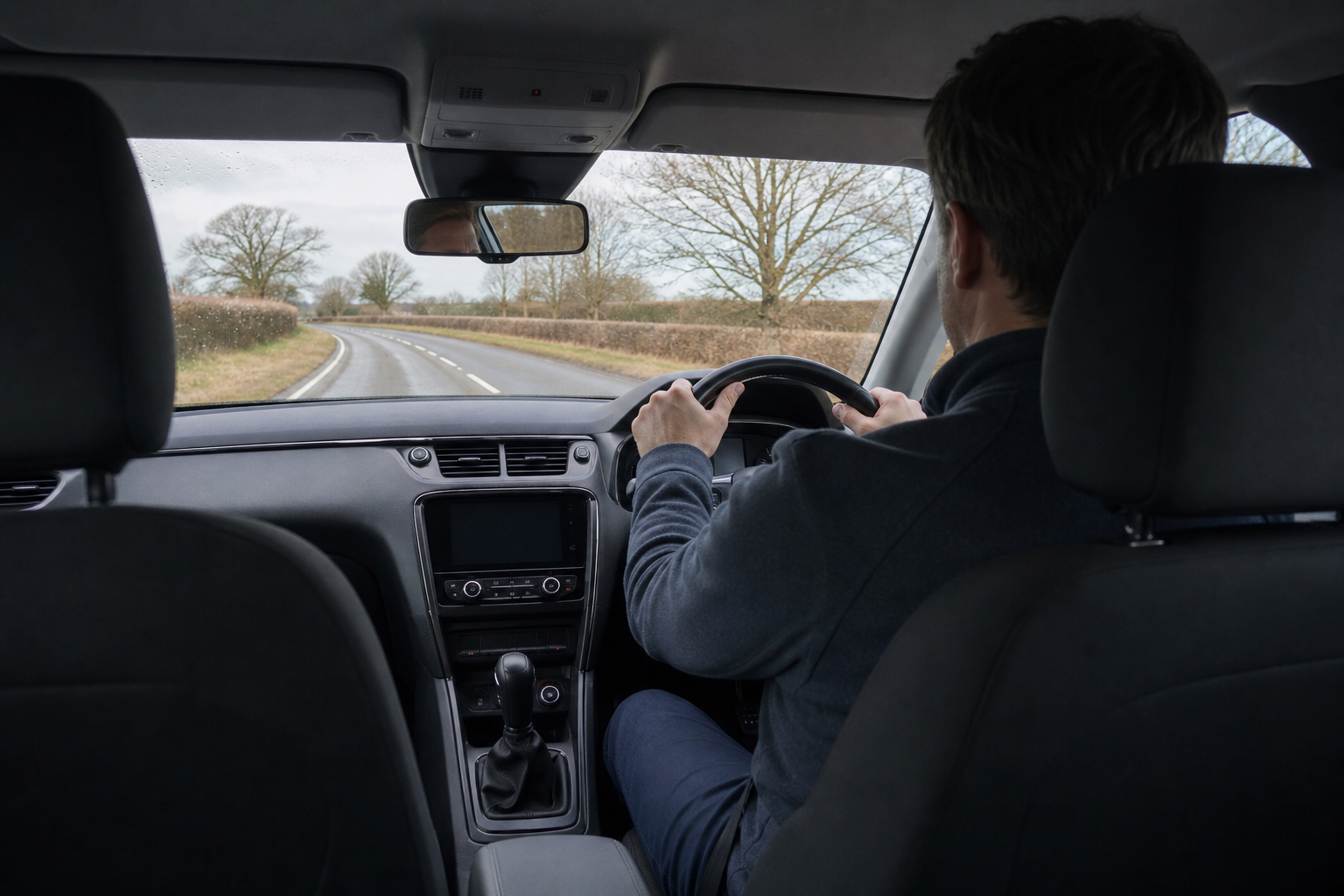
A driver on a British country road

Why the commute shows up in the treatment room

As an osteopath it is not only about easing the ache you walk in with. It is about asking what your body does for hours at a time. For many people around Hartley Wintney, Fleet, Hook and the M3 corridor, that answer is sitting in a car.

A car seat is not a treatment couch. The seat pan, lumbar support and steering reach are designed for a range of bodies, not yours. Over a 40-minute commute the same small mismatch — a seat a fraction too reclined, a dead pedal you never use, a wallet in a back pocket — adds up.

What I look at in clinic

I will still examine how your lumbar spine, hips and thoracic spine move, and I will use hands-on treatment where it is appropriate. I will also ask about seat height, whether you can easily depress the clutch or accelerator without hiking a hip, and whether you brace your shoulders into the steering wheel in traffic.

People often describe a dull lumbar ache that eases after walking around the supermarket, then returns on the drive home. That pattern is more about load and position than a single “slipped disc” moment — though discs, joints and muscles can all be involved, and a proper assessment is what tells them apart.

Practical changes that often help

Bring the seat close enough that your elbows stay soft on the wheel. Use the head restraint so the back of your head can rest, rather than poking the chin forward at the windscreen. If you can, break a long journey every 45–60 minutes and walk for two minutes.

None of this replaces medical care if you have red-flag symptoms, and it is not a guarantee. It is the kind of advice I give alongside osteopathic treatment so you are not undoing the session on the M3.

This article is general information for people considering care at Health at Hart in Hartley Wintney. It is not a diagnosis, a prescription, or a promise of outcome. If you have sudden, severe or unexplained symptoms — including chest pain, unexplained weight loss, night pain, bowel or bladder changes, or a new neurological problem — seek urgent medical advice (NHS 111 or 999). UK osteopaths are regulated by the General Osteopathic Council. Counsellors named here are BACP-registered where stated. Always check with your GP or insurer if you are unsure whether a treatment is appropriate for you.

Appointments

Ready to book, or not sure who to see?